Volkskundemuseum Wien
Otto Wagner Areal, Pavillon 1
Baumgartner Höhe 1, 1140 Wien
Öffnungszeiten:
Di-Fr: 10-17 Uhr
Anfahrt
Postanschrift:
Laudongasse 15-19, 1080 Wien
T: +43 1 406 89 05
F: +43 1 406 89 05.88
E: office@volkskundemuseum.at
Zum Newsletter:
HIER anmelden &
informiert bleiben!
Mostothek @ OWA
Mai-Sep: Dienstags, 17 Uhr
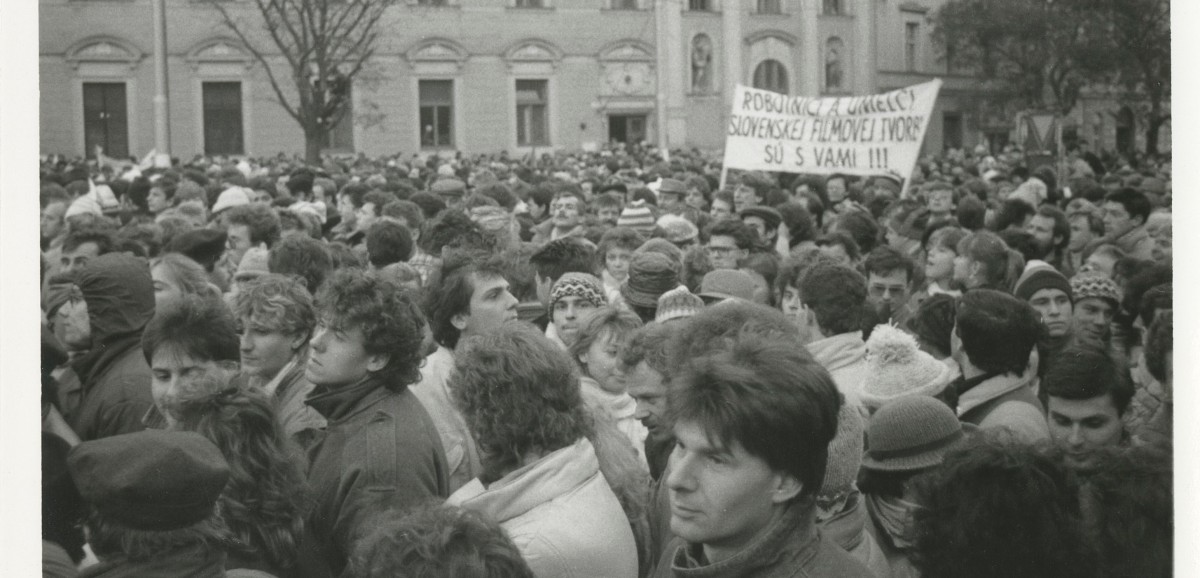
“Turning Points”, at its core, focuses on the idea of making social turning points and societal changes of the past decades visible. Through personal objects and individual life stories, the project aims to highlight their connections to social shifts and analyse current political and societal developments from multiple perspectives.
The project also explores how museums can collaborate during times of political tension to carry out their democratic mission. The goal is to build transnational and interregional networks to discuss processes such as de-/democratization, il-/liberalization, de-fascization, and comparable societal developments, thereby promoting political discourse and cultural participation.
“Turning Points” focuses on Vienna and Bratislava, as well as the rural area between the two capitals—a region historically shaped by the Habsburg Monarchy, the division during the Iron Curtain era, and today‘s EU membership.
As part of the project, two very different buildings will be revitalised and permanently repurposed for cultural and democracy-building purposes in the future: In Vienna, the air-raid shelter in Schönbornpark will be transformed into a multipurpose public space, while in Bratislava, a new exhibition on contemporary history will be created in a historic building.
Both museums draw continuously on their collections, archives, and their respective perspectives to provide insight into societal developments and to strengthen democratic values.The focus on the period from the mid-1980s to today allows “Turning Points” to bring together individual memories, political upheavals, and regional differences. Through oral history interviews, participatory formats, and the “slow memory” approach, the project incorporates diverse social, regional, and generation-specific perspectives.
To support work on the project, the Museums are forming an interdisciplinary research team to work on expanding and digitising the collections, designing exhibitions, and implementing educational programs. The team includes Ľubica Voľanská, who is primarily responsible for project management and research, and Thomas Trabitsch, who focuses mainly on education and communication. Starting in July 2026, two additional positions will be filled to document the project and implement the educational programs.
For Press Download
About the history of the bunker: massivunsichtbar.at
About the lead partner: Museum der Stadt Bratislava
About the radio report from: Radio Slowakei International


The project also explores how museums can collaborate during times of political tension to carry out their democratic mission. The goal is to build transnational and interregional networks to discuss processes such as de-/democratization, il-/liberalization, de-fascization, and comparable societal developments, thereby promoting political discourse and cultural participation.
“Turning Points” focuses on Vienna and Bratislava, as well as the rural area between the two capitals—a region historically shaped by the Habsburg Monarchy, the division during the Iron Curtain era, and today‘s EU membership.
As part of the project, two very different buildings will be revitalised and permanently repurposed for cultural and democracy-building purposes in the future: In Vienna, the air-raid shelter in Schönbornpark will be transformed into a multipurpose public space, while in Bratislava, a new exhibition on contemporary history will be created in a historic building.
Both museums draw continuously on their collections, archives, and their respective perspectives to provide insight into societal developments and to strengthen democratic values.The focus on the period from the mid-1980s to today allows “Turning Points” to bring together individual memories, political upheavals, and regional differences. Through oral history interviews, participatory formats, and the “slow memory” approach, the project incorporates diverse social, regional, and generation-specific perspectives.
To support work on the project, the Museums are forming an interdisciplinary research team to work on expanding and digitising the collections, designing exhibitions, and implementing educational programs. The team includes Ľubica Voľanská, who is primarily responsible for project management and research, and Thomas Trabitsch, who focuses mainly on education and communication. Starting in July 2026, two additional positions will be filled to document the project and implement the educational programs.
For Press Download
About the history of the bunker: massivunsichtbar.at
About the lead partner: Museum der Stadt Bratislava
About the radio report from: Radio Slowakei International
Strategic partner: